
Understanding the Ludwig Scale: A Guide to Female Hair Loss Patterns
The Ludwig hair loss scale is a critical tool for understanding progressive hair loss patterns in women. Unlike the Norwood scale, which focuses on male hair loss, the Ludwig scale is specifically designed to address the unique patterns and characteristics of female hair loss. This guide will delve into what the scale measures, its types, and how it can guide treatment options.
What Is the Ludwig Scale?
The Ludwig scale is a medical classification system used to describe female pattern hair loss. The Ludwig scale helps doctors evaluate the severity of hair loss in women and identify the stage of thinning across the scalp. This scale focuses mainly on hair thinning along the top of the scalp rather than a receding hairline. The Ludwig scale is widely used by hair restoration specialists when diagnosing female pattern baldness and planning treatment.
The Ludwig scale categorizes female hair loss into three main types based on severity:
-
Type 1: Mild thinning on the top of the scalp.
-
Type 2: Moderate thinning with noticeable widening of the part.
-
Type 3: Extensive thinning, often leading to significant scalp visibility.
This scale is invaluable for diagnosing female pattern baldness and helps women and their physicians determine appropriate steps for managing hair loss.
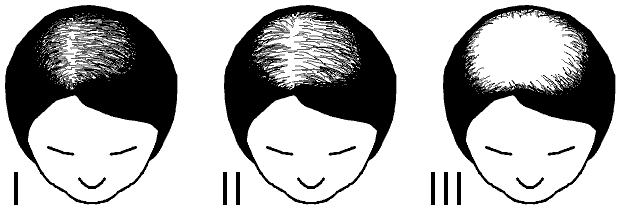
You may have a hunch where you fall on the Ludwig hair loss scale. The good news is that if you suffer from the effects of female pattern baldness and it bothers you, chances are high we can help.
Why Is the Ludwig Scale Important?
Understanding where you fall on the Ludwig scale helps to:
-
Identify the severity of your hair loss.
-
Explore possible causes and rule out underlying medical conditions.
-
Create a customized treatment plan.
Female Hair Loss Patterns and the Ludwig Scale
Unlike men, women rarely experience complete baldness. Instead, the Ludwig hair loss scale highlights how women experience diffuse thinning, often starting at the crown and spreading outward.
Types of Hair Loss on the Ludwig Scale
Type 1: Early Thinning
Type 1 represents the earliest stage of hair loss, often characterized by:
-
Slight thinning at the crown.
-
A barely noticeable widening of the central part.
At this stage, most women retain enough density to conceal their hair loss with strategic styling. However, early intervention is crucial to prevent further progression.
Treatment Options for Type 1 Hair Loss:
-
Topical Medications for Women: have been shown to slow or halt hair thinning.
Type 2: Moderate Thinning
In Type 2, the hair thinning becomes more apparent:
-
Noticeable widening of the part line.
-
Reduced density at the top of the scalp.
This stage can significantly impact a woman’s confidence, but several treatments can help address it.
Treatment Options for Type 2 Hair Loss:
-
Hair Restoration Procedures:
-
Follicular Unit Excision (FUE): A technique that removes individual follicles from a donor area to be transplanted to thinning areas.
-
Strip Harvesting: A method where a strip of scalp from the donor area is transplanted to restore density.
-
-
Lifestyle Changes: Managing stress, improving diet, and addressing hormonal imbalances can support hair health.
Type 3: Extensive Thinning
Type 3 is the most severe stage on the Ludwig scale:
-
Significant hair loss at the crown, with scalp visibility increasing.
-
Hair at the sides and back remains largely unaffected.
Women at this stage may feel frustrated or hopeless, but specialized treatments can offer transformative results.
Treatment Options for Type 3 Hair Loss:
-
Hair Transplants:
-
Pioneering techniques like RESTORE® No-Shave FUE™ Method ensure natural-looking results with minimal scarring.
-
-
Wigs and Hairpieces: High-quality wigs offer a cosmetic solution while undergoing treatment.
-
Consultation with Specialists: A board-certified physician can help tailor a comprehensive plan.
Causes of Hair Loss Not Covered by the Ludwig Scale
While the Ludwig hair loss scale focuses on female pattern baldness, other conditions may contribute to hair thinning, including:
-
Traction Alopecia: Caused by tight hairstyles.
-
Scarring Alopecia: Results from injuries or cosmetic procedures.
-
Inflammatory Conditions: Such as lupus or lichen planopilaris.
At RESTORE® Hair, we specialize in treating these conditions alongside those categorized by the Ludwig scale.
How the Ludwig Scale Guides Treatment
The Ludwig hair loss scale provides a framework to guide women toward effective solutions. By identifying the stage of hair loss, patients and doctors can:
-
Choose appropriate non-surgical treatments like PRP or Minoxidil.
-
Determine candidacy for hair transplant procedures.
-
Monitor the progression of hair loss over time.
Hair Restoration Techniques at RESTORE® Hair
At RESTORE Hair, we offer state-of-the-art treatments to help women regain confidence. Here’s how:
RESTORE® No-Shave FUE™ (Follicular Unit Excision)
This minimally invasive technique removes individual hair follicles from the donor area and transplants them into thinning areas. Advantages of FUE include:
-
No visible scarring.
-
Quick recovery.
-
Natural-looking results.
Medications and Supplements
Medications can help maintain existing hair. Supplements rich in biotin, zinc, and iron can support overall hair health.
Why Choose RESTORE Hair?
RESTORE Hair stands out for our commitment to providing personalized, effective solutions for women experiencing hair loss. Here’s what sets us apart:
-
Expert Team: Led by board-certified physicians with years of experience.
-
Cutting-Edge Technology: We specialize in state-of-the-art procedures like RESTORE® No-Shave FUE™.
-
Patient-Centric Approach: We prioritize your comfort, safety, and satisfaction at every step.
Empowering Women Through Hair Restoration
Hair loss can take a toll on a woman’s self-esteem and overall quality of life. The Ludwig scale helps demystify the process, empowering women to take proactive steps toward restoration. At RESTORE Hair, we’re here to guide you on your journey to renewed confidence.
Take the Next Step
If you’re experiencing hair thinning or loss, contact us at RESTORE Hair. Schedule a consultation today to determine your place on the Ludwig hair loss scale and explore the best treatment options tailored to your needs.